
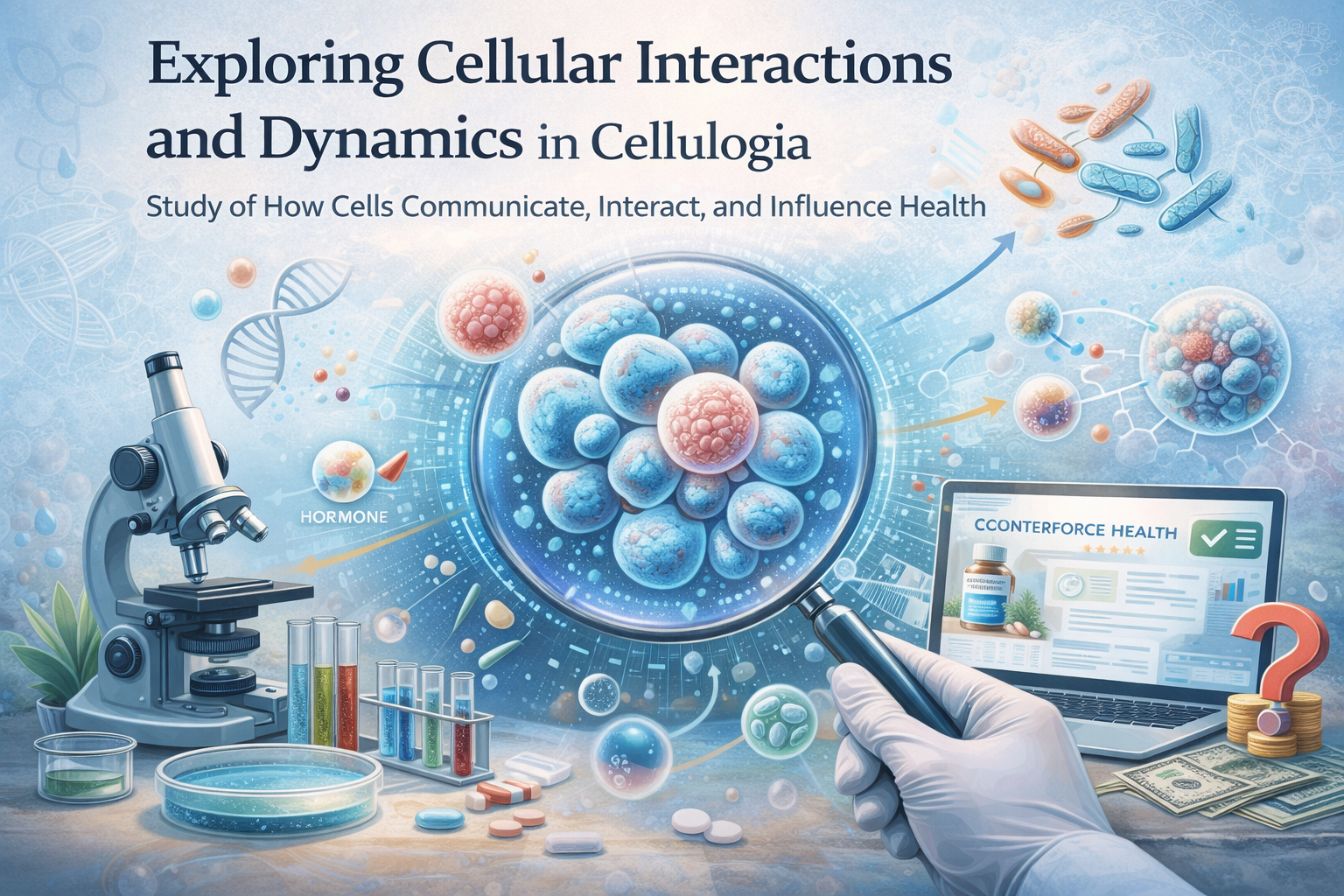
Welcome to the intriguing realm of Cellulogia! This emerging discipline explores how cells—the fundamental units of life—connect, communicate, and influence one another. Although cells are often viewed as independent structures, they actually operate within an intricate system of interaction and cooperation. From microscopic organisms to complex human tissues, these cellular relationships play a vital role in shaping life as we know it.
In this article, we’ll examine not only the anatomy and roles of cells but also how their interactions impact growth, health, and disease. Whether you’re passionate about biology or simply curious about how life functions at the smallest level, join us as we journey through the dynamic science of Cellulogia.
The Structure and Function of Cells
Cells serve as the foundation of all living organisms, each uniquely structured to carry out specific tasks. Their design is remarkably complex, with multiple components working together seamlessly. The cell membrane forms a selective boundary, regulating the movement of substances in and out of the cell.
Within the cell lies the nucleus, which contains genetic information and governs cellular activity by controlling gene expression. Surrounding the nucleus are essential organelles such as mitochondria, responsible for energy production, and ribosomes, which synthesize proteins.
The coordination among these structures enables cells to respond and adapt to their surroundings efficiently. Different cell types possess specialized structures suited to their functions—muscle cells facilitate movement, while nerve cells transmit electrical signals.
By studying these structures, scientists gain valuable insights into biological processes and disease mechanisms. Each discovery enhances fields like medicine and biotechnology, underscoring the importance of cellular architecture in sustaining life.
Interactions Between Cells: Signaling Pathways and Communication
Cell-to-cell interaction is essential for maintaining healthy tissues and organ systems. Central to these interactions are signaling pathways that act as communication channels between cells.
Cells communicate through various mechanisms, one of the most common being chemical signaling. Molecules such as hormones and neurotransmitters bind to receptors on target cells, triggering responses that modify cellular behavior.
Another important form of interaction involves direct physical contact. Structures like gap junctions and tight junctions allow neighboring cells to exchange ions, nutrients, and even signaling molecules directly.
These communication systems enable coordinated actions that regulate immune responses, tissue repair, and overall balance within the body. The complexity of signaling pathways highlights how interconnected cellular life truly is.
The Role of Cell Interactions in Development and Disease
Cell interactions are fundamental to both normal development and the onset of disease. During early development, cells rely on constant communication to guide growth, differentiation, and the formation of organs.
This process is controlled by signaling molecules such as growth factors, which instruct cells on when to divide, specialize, or migrate. Precise communication ensures proper tissue formation and function.
When these interactions become disrupted, disease can arise. Cancer, for example, involves abnormal signaling that leads to unchecked cell growth. Autoimmune disorders can develop when communication errors cause the immune system to attack healthy cells.
By understanding these interaction networks, researchers can identify new treatment strategies. Correcting faulty signals or restoring normal communication patterns offers promising pathways for managing complex diseases.
Case Studies: How Cell Interactions Impact Health and Wellness
Real-world research highlights the importance of cellular interaction in health. One notable example involves immune system responses, where communication between T-cells and B-cells strengthens the body’s defense against infections.
Cancer research provides another powerful illustration. Tumor cells often alter communication with surrounding healthy cells, creating conditions that support tumor growth and spread. Studying these interactions has led to more targeted and effective therapies.
Stem cell research also demonstrates the value of cellular communication. By controlling signaling environments, scientists can direct stem cells to repair damaged tissues, advancing regenerative medicine.
These examples show how deeply cell interactions influence health outcomes, reinforcing the significance of Cellulogia in modern medical research.
Future Directions in Cellulogia Research
The future of Cellulogia holds immense promise. Advances in technologies such as CRISPR and single-cell sequencing are enabling researchers to study cellular behavior with unprecedented precision.
There is growing interest in the relationship between cells and the microbiome. Understanding how microorganisms influence cellular function could revolutionize approaches to health and disease prevention.
Regenerative medicine continues to be a major focus, with scientists exploring how manipulating cell interactions can accelerate healing and tissue regeneration.
Artificial intelligence is also transforming research. Machine learning tools can analyze vast datasets to uncover patterns in cellular communication that were once impossible to detect.
As interdisciplinary collaboration increases, combining biology with engineering and computer science, new insights into cellular interaction will continue to emerge.
Conclusion
Cellulogia provides a captivating window into the complex world of cellular relationships. Studying cells goes beyond understanding their structure—it reveals how communication and cooperation drive health, development, and disease.
Exploring cellular interactions helps uncover the mechanisms behind normal biological functions and pathological conditions. The case studies discussed demonstrate the profound impact these interactions have on wellness and medical advancement.
As research progresses, Cellulogia will continue to evolve, offering deeper insights and new possibilities for treatment and prevention. Technological advancements will further expand our understanding of how cells behave and interact.
Embracing Cellulogia means embracing a deeper appreciation for the microscopic interactions that shape life itself. This ever-growing field promises to reshape our understanding of biology and human health in the years to come.
More Like This
- Author Decached Heladim Jomsel: A Complete Guide
- Recipesjelly.com www.recipes jelly.com: A Friendly Guide
- NFL Cuts Tommy Mellott Junior Bergen: A Complete Guide
- Jeff Bezos Partner: The Inspiring Story of Lauren Sánchez and His Family Journey
- Jennifer Aniston: Celebrating Her Age, Iconic Career, and Timeless Charm
