
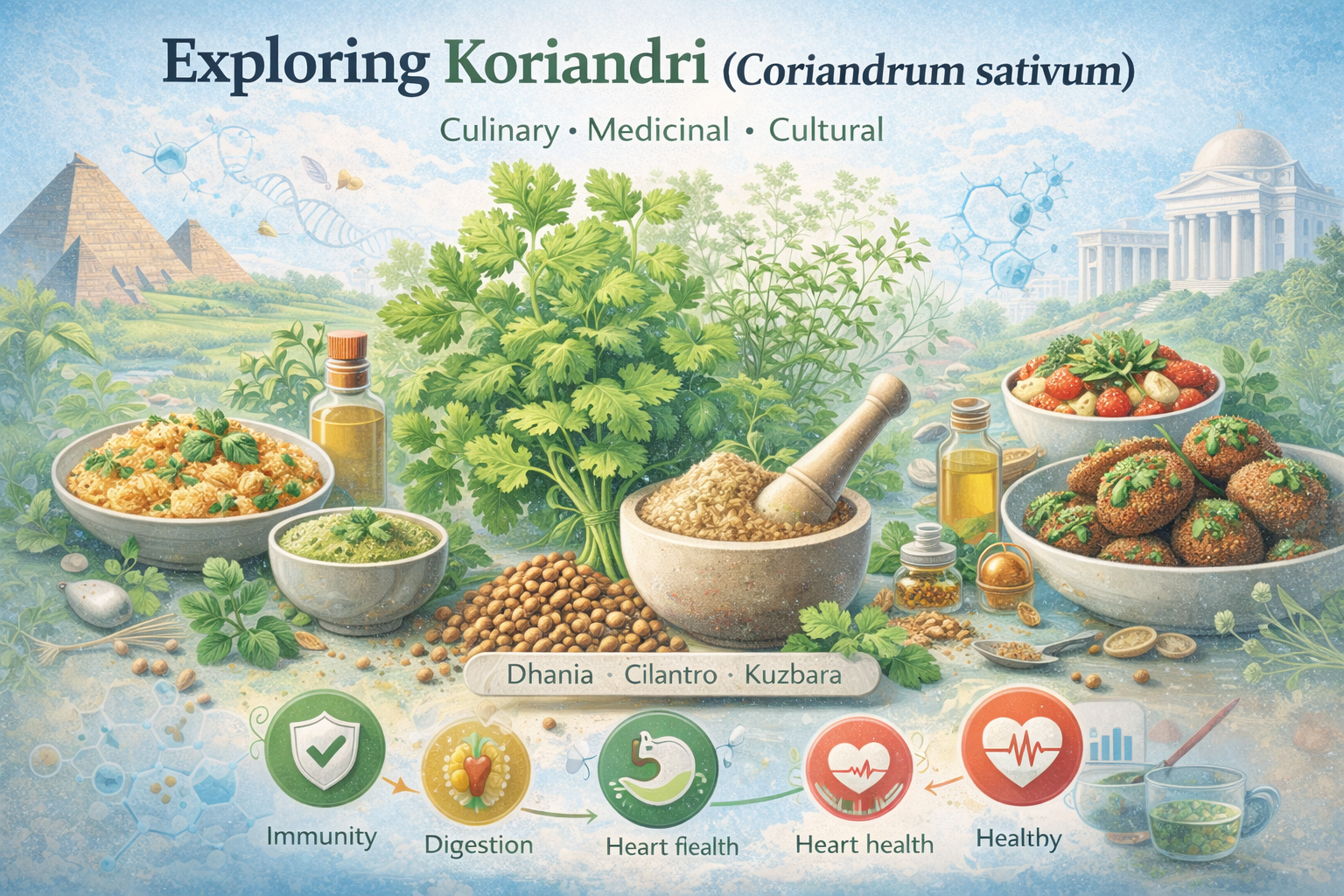
Welcome to the rich and aromatic world of Koriandri! Scientifically known as Coriandrum sativum, this remarkable plant is celebrated worldwide for its culinary, medicinal, and cultural importance. Known interchangeably as coriander or cilantro depending on region, Koriandri represents a unique dual-purpose herb: its fresh green leaves are loved for their bright, citrusy aroma, while its dried seeds deliver a warm, nutty flavor widely used in spice blends. Belonging to the Apiaceae family, Koriandri is also known by names such as dhania in India, kuzbara in the Middle East, and koriandri in Albania. Its versatility has allowed it to seamlessly connect cuisines, agriculture, and healing traditions across the globe.
Botanical Description of Koriandri
Koriandri is a soft, herbaceous annual plant characterized by delicate, feathery green leaves. It produces small umbrella-shaped clusters of white to pale pink flowers, which later develop into round seeds that mature into a golden-brown color. The plant completes its entire life cycle within one growing season. From germination, which occurs within approximately two weeks, it grows into a bushy plant reaching about 50–60 cm in height before flowering and producing seeds. Koriandri flourishes best in temperate climates, preferring loose, well-drained soil and abundant sunlight. Although visually similar to parsley, it is easily distinguished by its unmistakable fragrance and seed structure.
Origin and Distribution of Koriandri
Koriandri has an ancient history spanning more than 7,000 years, with origins traced to the Mediterranean region and Southwest Asia. Archaeological findings reveal coriander seeds in ancient Egyptian tombs, including that of King Tutankhamun, indicating its ceremonial and culinary significance. Ancient Greeks and Romans prized it as both a food flavoring and a medicinal ingredient. Through expanding trade routes, coriander traveled east to India and China and west into Europe and the Americas. Over time, it became deeply rooted in Indian spice mixtures, European baked goods, and Latin American sauces, demonstrating its universal adaptability.
Culinary Uses of Koriandri Worldwide
Koriandri Leaves
Fresh Koriandri leaves are known for their sharp, lemony flavor and are widely used as a garnish and seasoning. They play an essential role in Latin American, Indian, Thai, and Vietnamese cooking, enhancing dishes such as guacamole, curries, soups, and chutneys. To preserve their aroma, the leaves are typically added toward the end of cooking.
Koriandri Seeds
Koriandri seeds are commonly roasted and ground to create spice blends like curry powder, garam masala, and pickling spices. Roasting intensifies their flavor, making them ideal for marinades, stews, and sauces. In European cuisine, the seeds are often used in bread, sausages, and herbal liqueurs.
Popular Dishes
In Indian cuisine, Koriandri is integral to dishes such as biryani, sambar, and various chutneys. Mexican food features it prominently in tacos and salsa verde. Middle Eastern favorites like tabbouleh and falafel rely on its freshness, while Albanian dishes such as tava e dhiut and fërgesë incorporate its aromatic qualities.
Nutritional Value of Koriandri
Koriandri is highly nutritious and packed with essential vitamins and minerals, including vitamins C, K, and A, along with iron, potassium, and magnesium. These nutrients support immune health, bone strength, muscle function, and skin vitality. The herb is also rich in dietary fiber, antioxidants, and essential oils that aid digestion and reduce inflammation. Despite its nutrient density, it remains low in calories, making it an excellent addition to balanced diets.
Health Benefits of Koriandri
Koriandri is well-regarded for its medicinal properties. It aids digestion by promoting enzyme secretion and easing bloating. Antioxidants such as quercetin and linalool help reduce inflammation and combat oxidative stress. Research suggests that it may help regulate blood sugar and cholesterol levels, contributing to metabolic health. Its antimicrobial effects support gut health and help fight harmful bacteria. Additionally, Koriandri contributes to heart health, bone density, immune support, and skin clarity.
Genetic Factors and Flavor Perception
Koriandri is famous for its divisive taste. While many people enjoy its refreshing citrus notes, others perceive it as soapy. This difference is linked to genetic variations in the OR6A2 gene, which affects sensitivity to certain aldehyde compounds in the leaves. This genetic insight explains why culinary preferences for Koriandri vary widely across cultures and individuals.
Growing Koriandri at Home
Growing Koriandri at home is simple and rewarding. It prefers loose, well-drained soil and requires around four to six hours of sunlight daily. Seeds should be sown directly into soil or containers about one centimeter deep after the last frost. Regular but moderate watering is essential. For leafy harvests, the plant should be cut before flowering. If seeds are desired, allow the plant to flower and dry naturally. Using organic compost and eco-friendly pest control supports healthy growth.
Best Storage Options for Koriandri
To preserve freshness, Koriandri leaves can be wrapped in damp paper towels and stored in airtight containers in the refrigerator. Another option is freezing chopped leaves in ice cube trays with water or oil. Seeds should be fully dried and stored in sealed jars away from heat and moisture. Vacuum-sealing is ideal for long-term storage.
Koriandri in Traditional Medicine
In Ayurveda, Koriandri is valued for its cooling, detoxifying, and digestive properties, often used to balance bodily energies and treat fever, indigestion, and skin conditions. Traditional Chinese medicine associates it with vitality and longevity, while Unani and folk practices use it to support kidney health and regulate menstruation. Herbal teas and infusions are common medicinal preparations.
Non-Culinary Uses of Koriandri
Beyond cooking, Koriandri serves multiple purposes. Its essential oil is used in skincare products to soothe inflammation and treat acne. In aromatherapy, it is known to promote relaxation and reduce anxiety. Chewing fresh leaves helps combat bad breath due to its antimicrobial effects. In gardening, the plant acts as a natural pest repellent.
Koriandri and Sustainable Agriculture
Koriandri supports sustainable farming practices by improving soil health in crop rotation systems. Its flowers attract beneficial pollinators such as bees. When grown alongside legumes and leafy vegetables, it helps reduce pests and improve yields. Its ability to grow in compact spaces makes it ideal for organic and urban agriculture.
Scientific Research and Modern Applications
Scientific research confirms many of Koriandri’s traditional uses. Studies highlight its antioxidant, antidiabetic, and cholesterol-lowering properties. Extracts and essential oils are increasingly incorporated into supplements, cosmetics, pharmaceuticals, and functional foods. Ongoing research explores its potential benefits for neurological and inflammatory conditions.
Common Myths and Misconceptions
A common misconception is that cilantro and coriander are different plants, when they are simply different parts of the same plant. Another myth claims it lacks nutritional value, which scientific evidence disproves. The soapy taste perception is often blamed on quality, though genetics are the true cause. Allergic reactions are rare, despite common belief.
Side Effects and Precautions
Koriandri is generally safe when consumed in normal culinary amounts. However, individuals allergic to plants in the Apiaceae family should be cautious. Excess intake may cause digestive discomfort. Pregnant and breastfeeding individuals should limit consumption to food-level quantities. Those taking blood-thinning medications should consult healthcare professionals before consuming large amounts.
Koriandri in Culture and Folklore
Koriandri holds deep cultural symbolism, often representing health, warmth, and protection. It has been used in traditional ceremonies, weddings, and seasonal festivals. Folklore suggests it wards off negative energy and brings prosperity. In Mediterranean and Albanian cultures, it remains a valued kitchen and garden staple.
Simple Koriandri Recipes
- Fresh Cilantro Chutney: Blend leaves with mint, garlic, lemon juice, and green chili.
- Seasoned Cilantro Rice: Temper crushed seeds in oil and mix with rice and vegetables.
- Cilantro Chicken Curry: Prepare with yogurt-marinated chicken, ground seeds, and fresh leaves.
- Cilantro Tea: Boil seeds with ginger and fennel to aid digestion.
- Cilantro Salad Dressing: Blend leaves with lime, olive oil, honey, and cumin.
Koriandri in the Urban Kitchen
Modern chefs appreciate Koriandri for its bold flavor and nutritional benefits. It complements vegetarian, vegan, and low-carbohydrate diets. As a container-friendly herb, it thrives in urban kitchens and balconies, offering fresh harvests year-round.
Alternative Names and Linguistic Variants
Regional Name
- India: Dhania
- USA: Coriander (leaves), Cilantro (seeds)
- Europe: Cilantro
- Middle East: Kuzbara
- Latin America: Cilantro
- Albania: Koriandri
Final Thoughts
Koriandri is far more than a simple culinary herb—it bridges tradition and modern living, flavor and health, local heritage and global cuisine. Its resilience, versatility, and therapeutic value make it indispensable in kitchens and gardens alike. Whether grown at home, blended into spices, or used in healing infusions, Koriandri nourishes both body and soul. Honoring this ancient herb is not only a celebration of its past but also an embrace of a healthier and more flavorful future.
More Like This
- Author Decached Heladim Jomsel: A Complete Guide
- Recipesjelly.com www.recipes jelly.com: A Friendly Guide
- NFL Cuts Tommy Mellott Junior Bergen: A Complete Guide
- Jeff Bezos Partner: The Inspiring Story of Lauren Sánchez and His Family Journey
- Jennifer Aniston: Celebrating Her Age, Iconic Career, and Timeless Charm
